
Photo Gallery
SEEING IS BELIEVING: Documenting the Reality of Our Schools
Welcome to our Photo Gallery, a visual testament to the current state of our nation’s learning environments. While many school issues remain hidden behind walls or in water pipes, these images bring the reality of school building conditions to light. From structural deterioration to signs of environmental hazards like mold and lead, this collection serves as a vital tool for advocacy. By documenting these conditions, we aim to spark the conversations—and the actions—necessary to ensure every child learns in a space that is safe, healthy, and dignified.

Roxbury Elementary School Closed due to Asbestos
Exposure to environmental hazards like lead and mold in schools can cause serious, and sometimes permanent, health problems for children. Because kids’ bodies are still developing and they breathe more air relative to their size than adults, they are significantly more vulnerable.
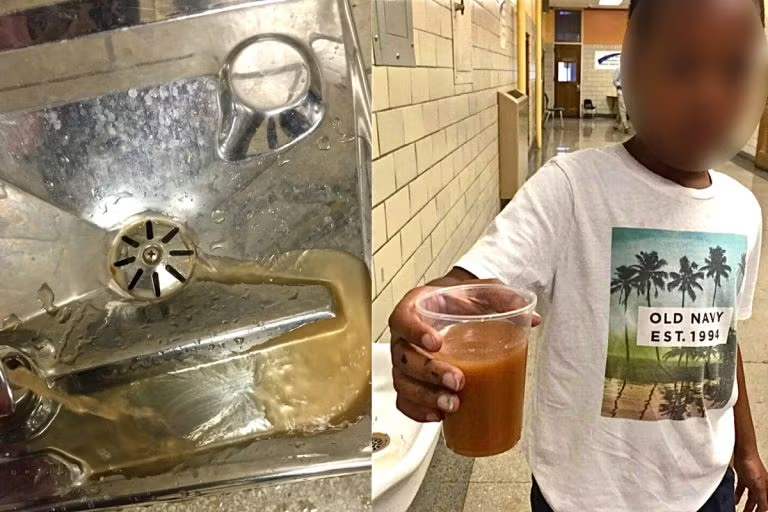
Photos taken by two former teachers at Frederick Douglass Mastery Charter School show water drawn from drinking fountains at the school in June of 2016.
The 2019 investigation by WHYY revealed that Mastery Frederick Douglass Elementary in North Philadelphia failed several city-mandated lead tests, including one fountain with lead levels 350 times the district’s limit. Despite being aware of these results and long-standing issues like “brown water,” school administrators failed to notify parents for nearly eight months, only doing so after being questioned by reporters.

Water intrusion at Lea Park Elementary, PA
Water intrusion in Lea Park Elementary School’s Room 308 has damaged lead-based paint, plaster, and ceiling tiles, creating hazardous lead dust on classroom surfaces. This contamination poses significant health risks to children, including potential behavioral issues and learning disabilities from lead exposure.

Holly Glen Elementary School in Monroe Township, New Jersey, was ordered to remain closed for the remainder of the 2017-2018 school year due to extensive mold contamination.
Asbestos is extremely dangerous because its microscopic fibers can be inhaled or swallowed when building materials are disturbed. For children, these risks are heightened as their lungs are still developing, and because asbestos-related diseases like mesothelioma or lung cancer have long latency periods (20–50 years), exposure in childhood creates a lifelong risk of developing fatal illnesses.

Roosevelt Middle School Mold in Classroom
When teachers returned to the building in September 2020 after the COVID-19 lockdown, they reported finding mold on walls, keyboards, desks, and inside cabinets. Sal Finelli, president of the Teachers Association, noted that music rooms were particularly affected, with instruments covered in mold.
The mold was attributed to a malfunctioning heating and cooling (HVAC) system that allowed moisture to build up while the school was unoccupied during the pandemic.